Services
Irrigation and water works
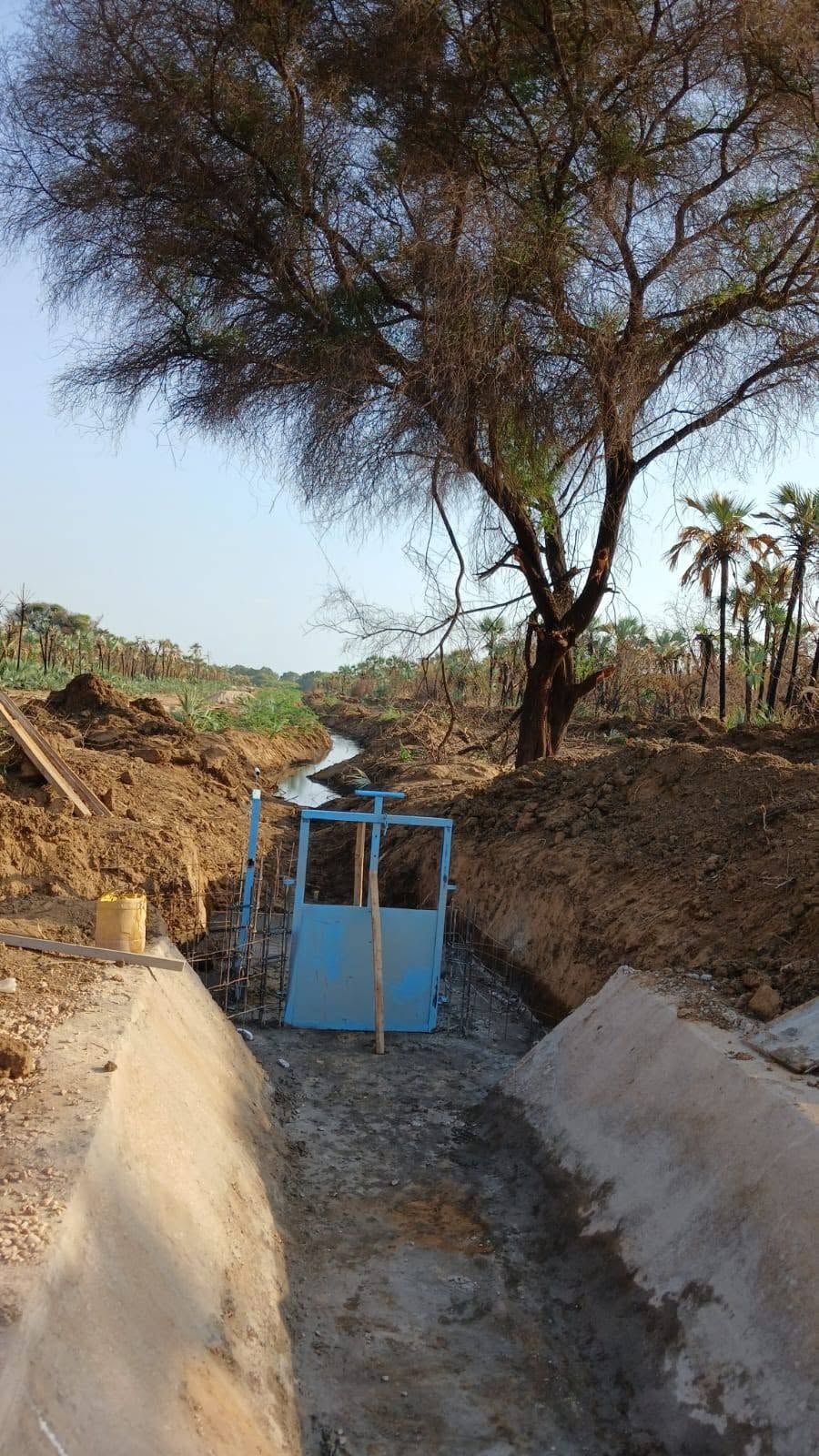
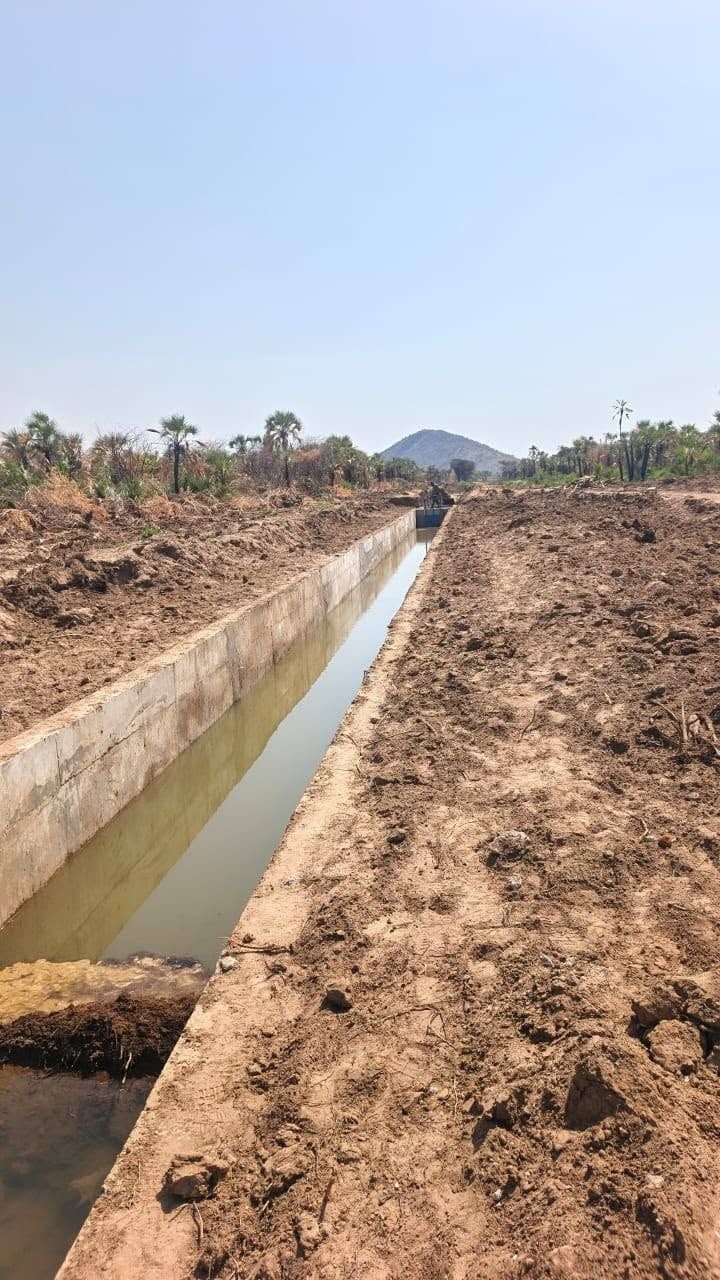
Lined canals, sluice gates, intakes and storage that carry river or borehole water to farmland.
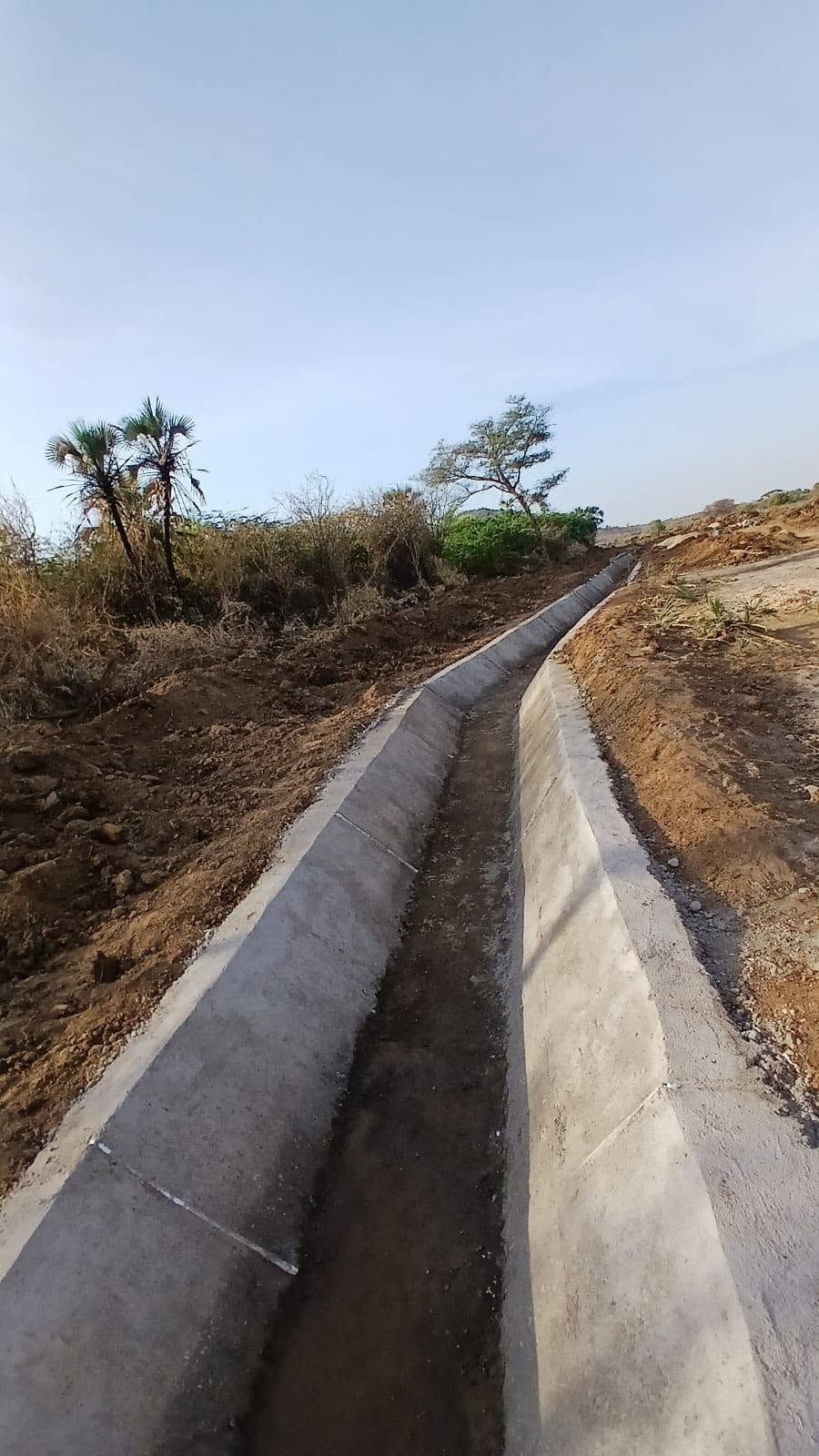
A canal works when its levels are right. We survey the fall along the whole line before any lining is cast.
What’s included
| Stage | Item | Detail |
|---|---|---|
| Survey | Levels and alignment | Fall along the full canal line |
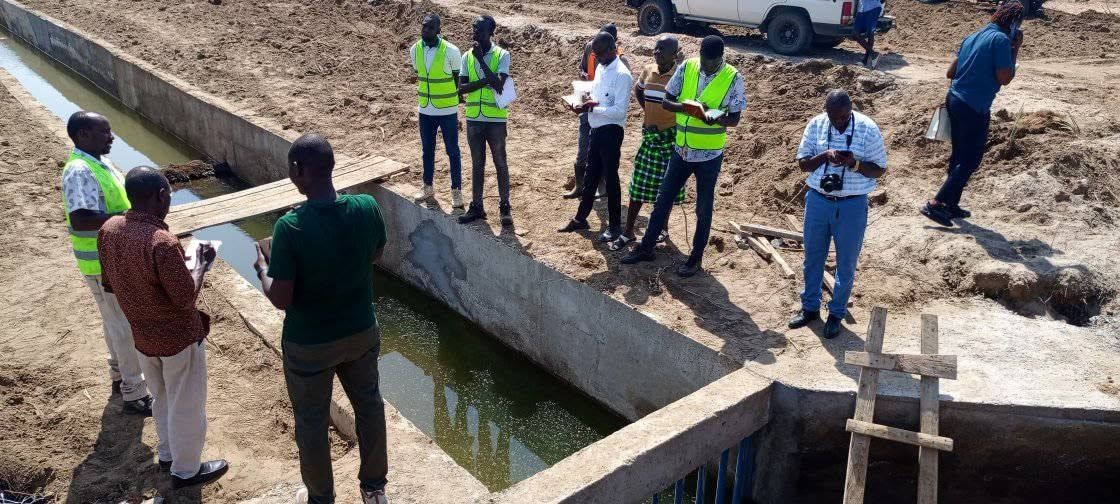
| Build | Canal lining | Concrete, in rectangular and trapezoidal sections |
| Gates and structures | Sluice gates, drops and crossings | |
| Storage | Tanks and water pans | |
| Handover | Operation | How to run the gates and clean the canal |
How it runs
- Walk the land. The farm, the water source and the people who will use the water.
- Levels. A survey of the fall along the route.
- Design. Canal sections, gates and crossings, with a priced bill of quantities.
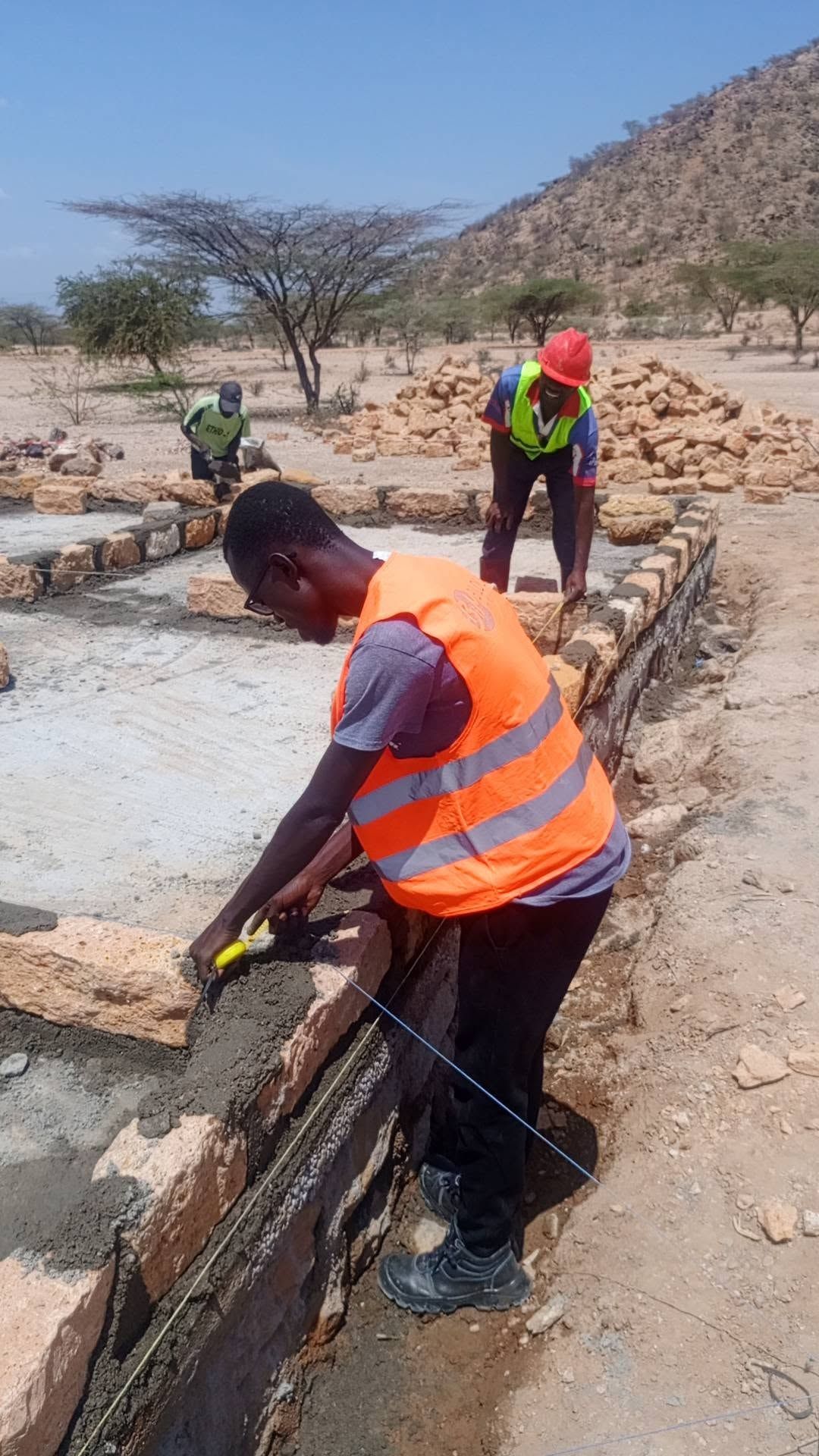
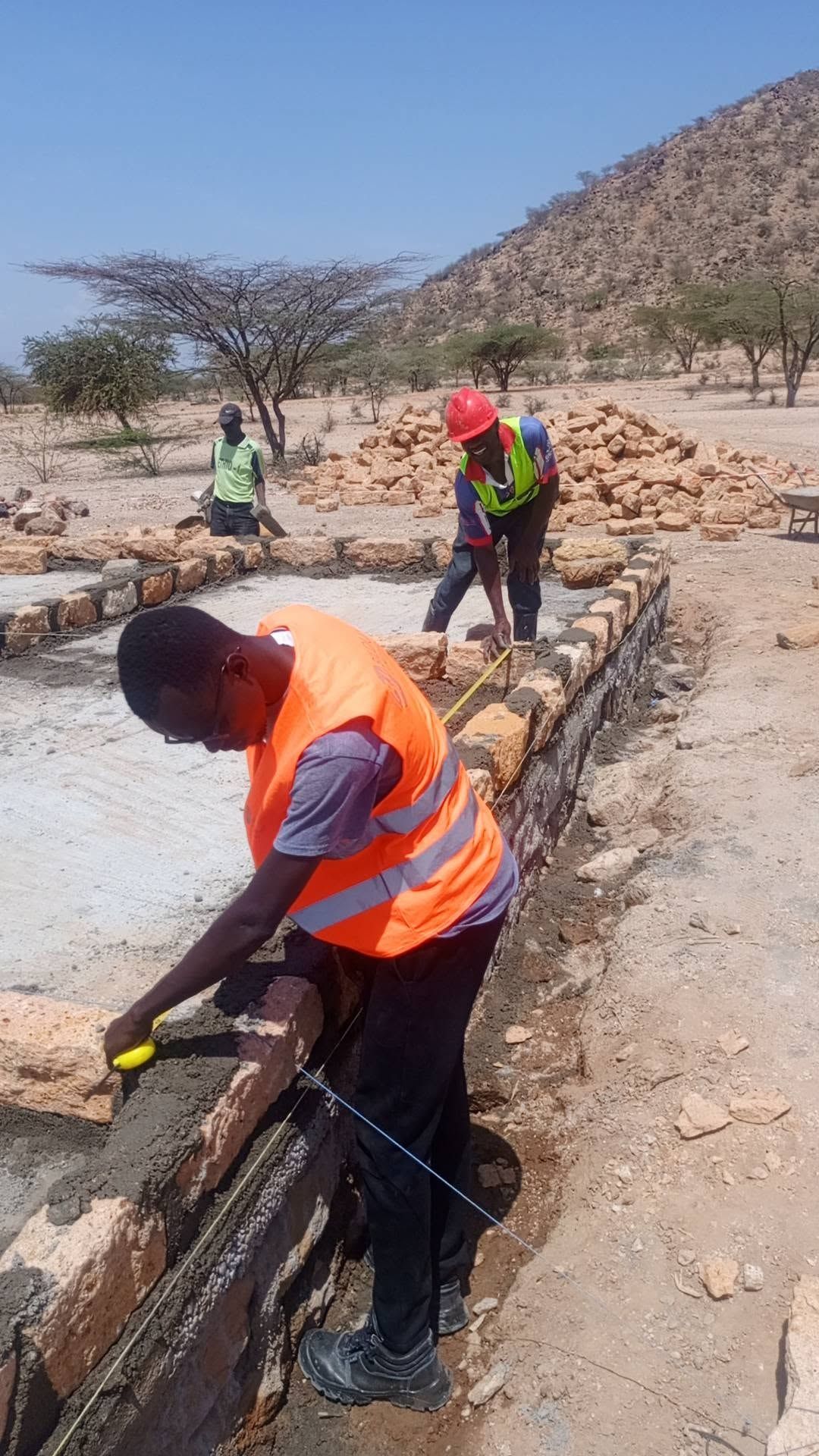
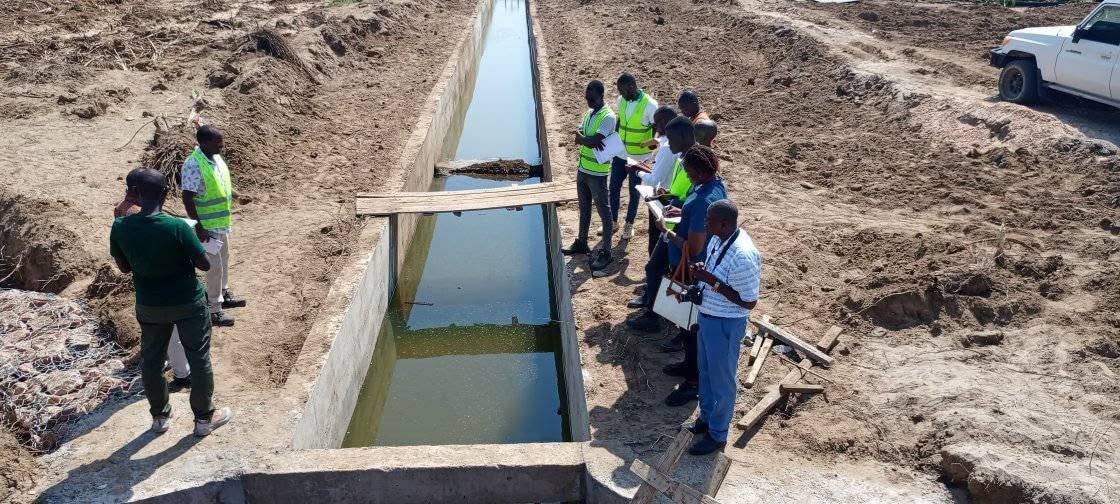
- Excavation and lining. Set out, dug and lined in concrete, checked as it goes.
- Gates and handover. Gates fitted and tested with water, then handed over.
Related project
Questions people ask
Can a canal be fed from a borehole?
For small plots, yes, with a pump and a storage tank. Larger schemes usually take water from a river.
Why line a canal in concrete?
An earth canal loses water into sandy ground and its banks wash out. Lining keeps the water and the shape.
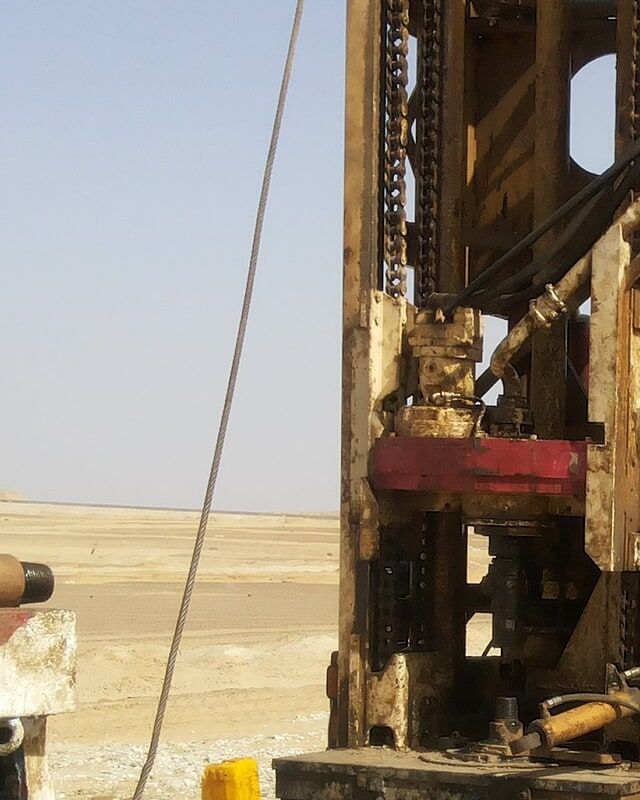
Drilling rig. Photo: Kamal Osama, CC BY-SA 4.0, Wikimedia Commons. Not an Almelo site.